
We are committed to food packaging PVC cling film, PE cling film,stretch wrap, aluminum foil and other disposal food packing film/foil.

Language
>
We are committed to food packaging PVC cling film, PE cling film,stretch wrap, aluminum foil and other disposal food packing film/foil.
Many people use Saran Wrap or cling film every day without thinking about how the film actually sticks to containers, food surfaces, or itself. Unlike traditional adhesives, cling film does not usually rely on a layer of glue.
Instead, its ability to stay in place depends on a combination of material properties, film formulation, surface contact, and electrostatic or molecular attraction. Understanding how cling film adhesion works can also help buyers choose the right film for household, food service, supermarket, and commercial packaging applications.
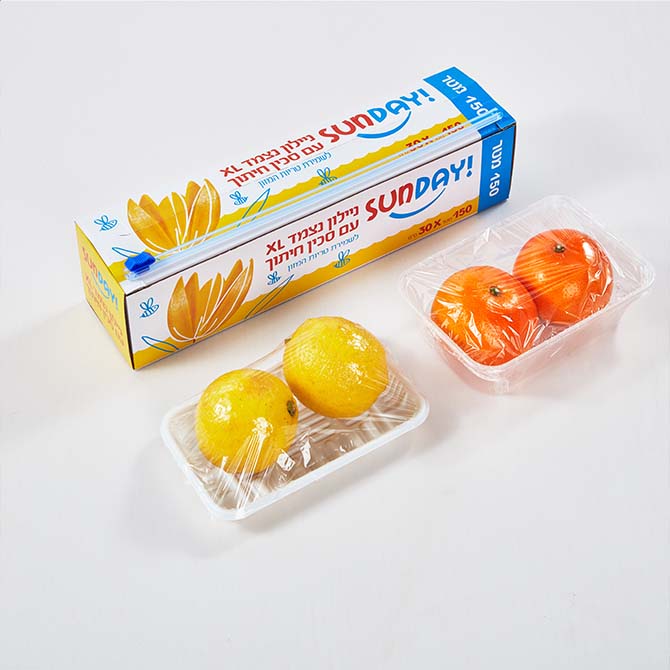
Saran Wrap and other types of cling film stick because the surface of the film can create attraction when it comes into close contact with another surface or another layer of film.
The exact cling performance depends on several factors, including:
Film material
Film formulation
Surface energy
Film thickness
Stretching performance
Surface smoothness
Contact pressure
When cling film is stretched over a bowl, tray, or food container, close contact between the film and the surface helps the film remain in position.
One of the most useful characteristics of cling film is its ability to overlap and hold together.
When one layer of film touches another layer, the film surfaces can create enough attraction to maintain the wrap around food or containers. This makes cling film useful for applications where a separate adhesive is not required.
However, cling performance can vary significantly between different types of film. A film designed for commercial food packaging may perform differently from a household cling wrap because the material formulation and intended application are different.
Yes. The material used to manufacture the film plays an important role in flexibility, stretchability, transparency, and cling performance.
PVC cling film is widely used in food packaging applications where strong cling performance and good transparency are required. The film can conform closely to containers and food trays, making it suitable for supermarkets, restaurants, food service operations, and commercial packaging.
Different film formulations may be developed to achieve specific requirements for cling, softness, stretchability, and packaging performance.
Learn more about PVC Cling Film for commercial food packaging applications.
PE Cling Film is another commonly used Food Wrapping material. Depending on the film structure and formulation, PE film can provide flexibility and protective performance for different food packaging requirements.
The choice between PVC and PE film should be based on the intended application, packaging method, performance requirements, and market preferences.
Learn more about PE Cling Film.
Cling film may not perform the same way on every surface. Several conditions can reduce its ability to stay in place.
Water, oil, dust, or food residues can affect the contact between the film and the surface. If the film cannot make close contact, cling performance may be reduced.
Very sharp edges, irregular shapes, or rough surfaces may make it more difficult for the film to maintain continuous contact.
Film thickness affects handling and flexibility. A thicker film may provide greater strength, but the required balance between strength and flexibility depends on the intended application.
Different packaging applications require different levels of cling, stretchability, and mechanical strength. A film designed for one application may not provide the same performance in another.
Stretching helps the film conform more closely to the object being wrapped. As the film is pulled across a container or product, the tension created by stretching helps keep the film in place.
For this reason, stretchability is an important property when evaluating cling film performance.
A good food wrapping film should provide a suitable balance between:
Stretchability
Cling strength
Tear resistance
Transparency
Ease of handling
For food packaging distributors, importers, supermarkets, and catering businesses, cling performance is only one part of the overall product evaluation.
Commercial buyers may also consider:
Film material
Roll width and length
Film thickness
Stretch performance
Tear resistance
Transparency
Packaging format
Food-contact requirements
Private label options
These factors can vary depending on whether the product is intended for household retail packaging, supermarkets, restaurants, or industrial food packaging operations.
Understanding how Saran Wrap and cling film stick can help buyers evaluate what type of film is suitable for their application.
Strong cling performance alone is not always enough. The right film should also provide the required flexibility, strength, transparency, and handling performance.
For commercial food packaging, selecting the right material and film specification can help improve packaging efficiency and product protection.
Whether customers are looking for PVC cling film or PE cling film, the final selection should be based on the specific packaging application and required performance.
DS Cling Film supplies food wrapping film solutions for different commercial packaging requirements, including customized roll specifications and packaging options for international markets.

We focus on overseas markets and major exports to different countries, selling well in Europe, America, the Middle East, Southeast Asia, etc.
Contact
No. 242 Shangjia Fenxi Road,Wanjiang District, Dongguan city, Guangdong Province ,China
Email:
Phone:
+86 18938161161