
We are committed to food packaging PVC cling film, PE cling film,stretch wrap, aluminum foil and other disposal food packing film/foil.

Language
>
We are committed to food packaging PVC cling film, PE cling film,stretch wrap, aluminum foil and other disposal food packing film/foil.
Stretch film is widely used to secure palletized goods, protect products during transportation, and improve load stability in warehouses and distribution operations. However, not all stretch film is designed for the same wrapping method.
The two most common categories are hand stretch film and Machine Stretch Film. While both are used to wrap and stabilize loads, they are designed for different equipment, working conditions, and packaging volumes.
Understanding the difference between hand stretch film and machine stretch film can help businesses select the right stretch wrap for their packaging operations.
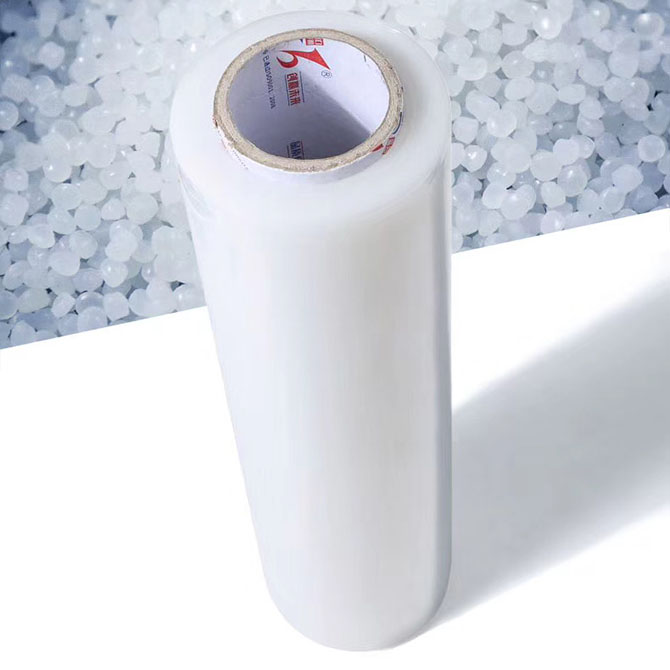
Hand stretch film is designed to be applied manually by warehouse workers or packaging operators. The film is typically supplied in rolls that can be handled directly without automatic wrapping equipment.
Hand stretch film is commonly used for:
Small and medium-volume packaging operations
Warehouse packaging
Irregular pallet loads
Short production runs
Businesses without automatic stretch wrapping equipment
Because the wrapping process is performed manually, the operator controls the wrapping tension and the number of film layers applied to the load.
Learn more about Hand Stretch Film.
Machine stretch film is designed for use with automatic or semi-automatic stretch wrapping machines.
During the wrapping process, the machine applies the film around the pallet according to programmed wrapping parameters. This can provide greater consistency when packaging a large number of loads.
Machine stretch film is commonly used in:
Large warehouses
Distribution centers
Manufacturing facilities
High-volume pallet packaging
Automated logistics operations
Learn more about Machine Stretch Film.
The main difference is the method used to apply the film.
Hand stretch film is applied manually, while machine stretch film is designed to operate with stretch wrapping equipment.
This difference affects the required film specifications and packaging performance.
| Feature | Hand Stretch Film | Machine Stretch Film |
|---|---|---|
| Application Method | Manual wrapping | Automatic or semi-automatic wrapping |
| Suitable Volume | Low to medium volume | Medium to high volume |
| Wrapping Speed | Depends on the operator | Depends on machine settings |
| Wrapping Consistency | Can vary between operators | More consistent in automated operations |
| Equipment Required | No stretch wrapping machine required | Stretch wrapping equipment required |
Neither hand stretch film nor machine stretch film is universally better. The right choice depends on the packaging operation.
Hand stretch film may be a practical choice when pallet wrapping volumes are relatively low or when loads vary significantly in size and shape.
Machine stretch film may be more suitable when a company needs to wrap a large number of pallets and maintain more consistent packaging performance.
Stretchability is one of the most important performance characteristics of stretch wrap.
During pallet wrapping, the film is stretched around the load to create holding force. This helps keep products together during storage, handling, and transportation.
However, the required level of stretch depends on several factors:
Load weight
Pallet dimensions
Product shape
Stacking height
Transportation conditions
Wrapping method
A lightweight and uniform pallet may require different film performance from a heavy load with irregular product shapes.
When sourcing a stretch film or Stretch Wrap Roll, businesses should evaluate the actual packaging application rather than selecting film based only on roll thickness.
Important considerations include:
Heavier loads may require different levels of holding force and mechanical strength.
Loads with sharp corners or irregular surfaces may require better puncture resistance.
The film specification should match manual wrapping or the requirements of the stretch wrapping machine.
Film width should be selected according to pallet dimensions and the required wrapping coverage.
The required elongation and holding force should match the packaging conditions.
Long-distance transportation, vibration, and repeated handling can increase the requirements for load stability.
Hand stretch film and machine stretch film are developed for different wrapping methods. Using the wrong type of film may affect packaging efficiency and wrapping consistency.
For automated operations, the film should be selected according to the machine type and the required stretching performance.
For manual packaging, operators should select a roll that provides practical handling, suitable stretchability, and sufficient load stability.
Improving stretch film efficiency is not only about using less material. The objective is to achieve reliable load stability while maintaining suitable material consumption.
Businesses can improve packaging efficiency by:
Selecting the correct film for the load type
Matching the film to the wrapping method
Using appropriate wrapping tension
Controlling the number of film layers
Evaluating load stability after wrapping
Testing film performance under actual transportation conditions
The right combination of film strength, stretchability, and wrapping parameters can help reduce unnecessary material consumption while maintaining reliable pallet protection.
The choice between hand stretch film and machine stretch film depends mainly on packaging volume, available equipment, load characteristics, and operational efficiency requirements.
Hand stretch film can provide flexibility for manual packaging operations, while machine stretch film can support consistent wrapping in high-volume automated environments.
For businesses sourcing pallet packaging materials, evaluating the complete packaging process can help identify the most suitable stretch film specification.
DS Cling Film supplies Stretch Film solutions for different pallet wrapping and commercial packaging requirements, including hand stretch film and machine stretch film for different operational needs.

We focus on overseas markets and major exports to different countries, selling well in Europe, America, the Middle East, Southeast Asia, etc.
Contact
No. 242 Shangjia Fenxi Road,Wanjiang District, Dongguan city, Guangdong Province ,China
Email:
Phone:
+86 18938161161