
We are committed to food packaging PVC cling film, PE cling film,stretch wrap, aluminum foil and other disposal food packing film/foil.

Language
>
We are committed to food packaging PVC cling film, PE cling film,stretch wrap, aluminum foil and other disposal food packing film/foil.
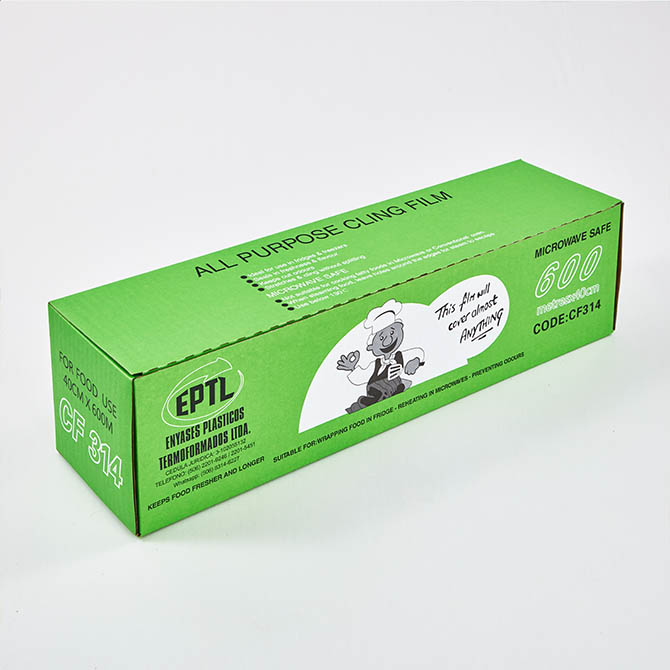
Saran Wrap, commonly known as plastic wrap or cling film, is a thin, flexible plastic film used to cover food, seal containers, and protect products during storage. Its manufacturing process involves raw material selection, polymer processing, film extrusion, cooling, quality inspection, and roll packaging. The specific process and material composition depend on the intended application and the performance requirements of the finished film.
Plastic wrap can be manufactured from several types of polymers, including polyethylene (PE) and polyvinylidene chloride (PVDC). Although these materials serve similar purposes, their properties differ.
Polyethylene (PE): Widely used for food packaging because of its flexibility, moisture resistance, and suitability for many food-contact applications.
Polyvinylidene chloride (PVDC): Known for its strong barrier properties against oxygen and moisture, making it useful when preserving food freshness is a priority.
Other polymer blends: Some manufacturers use specialized formulations to improve cling, clarity, strength, or processing performance.
Material selection affects the film's transparency, stretchability, sealing behavior, barrier performance, and cost. It is important to note that modern plastic wraps sold under different brands may use different materials, so not all products marketed as Saran wrap have the same composition.
The main production method is film extrusion. During this process, plastic resin is heated until it melts and can be formed into a continuous, thin film.
Manufacturers commonly use two extrusion methods:
Blown-film extrusion: Molten plastic passes through a circular die and is expanded into a thin tube using air. The tube is cooled, flattened, and wound into a roll.
Cast-film extrusion: Molten plastic is extruded through a flat die onto a cooling roller. This method provides precise thickness control and can produce films with consistent optical properties.
The appropriate method depends on the polymer, target thickness, production speed, and required film characteristics.
Cling performance is an important feature of plastic wrap because it allows the film to adhere to containers and overlap itself. Manufacturers control this property through material formulation, polymer selection, and processing conditions.
Several quality parameters are monitored during production:
Film thickness: Consistent thickness helps maintain predictable strength and wrapping performance.
Tensile strength and elongation: These properties determine how well the film stretches and resists tearing.
Cling performance: The film should adhere appropriately without becoming difficult to handle.
Transparency: Clear film helps users identify packaged food.
Barrier performance: Oxygen and moisture transmission rates matter when freshness and storage life are important.
For example, a food packaging business using automated wrapping equipment may require consistent film thickness and unwinding tension to minimize interruptions on the production line.
After extrusion and cooling, the film passes through slitting and winding equipment. Large film rolls are divided into narrower widths according to customer specifications.
The converted film is then wound onto cardboard or plastic cores, inspected, labeled, and packaged.
Different customers require different roll formats. Household products may use compact rolls with cutting edges, while restaurants and food-processing facilities may need wider rolls or bulk packaging.
Manufacturers must also consider packaging integrity, roll consistency, and traceability to support reliable distribution.
Plastic wrap intended for food contact must comply with the regulations applicable to its target market. Requirements vary by country and by the type of food being packaged.
Manufacturers should verify that the resin, additives, and finished film are suitable for the intended food-contact conditions. Testing may include migration testing, thickness measurement, tensile testing, and evaluation of film performance.
Temperature suitability is particularly important. A film designed for refrigerated storage may not be appropriate for microwave heating or direct contact with hot, fatty foods.
For commercial buyers, requesting technical data sheets, food-contact compliance documentation, and sample rolls can help evaluate a supplier before placing a large order.
Saran wrap manufacturing involves selecting suitable polymers, extruding a thin film, controlling its physical properties, and converting it into finished rolls. Material composition, extrusion technology, thickness consistency, and quality control all influence the final product.
For food packaging businesses, choosing a manufacturer with suitable production capabilities and reliable quality testing helps ensure that plastic wrap meets the requirements of its intended application.

We focus on overseas markets and major exports to different countries, selling well in Europe, America, the Middle East, Southeast Asia, etc.
Contact
No. 242 Shangjia Fenxi Road,Wanjiang District, Dongguan city, Guangdong Province ,China
Email:
Phone:
+86 18938161161