
We are committed to food packaging PVC cling film, PE cling film,stretch wrap, aluminum foil and other disposal food packing film/foil.

Language
>
We are committed to food packaging PVC cling film, PE cling film,stretch wrap, aluminum foil and other disposal food packing film/foil.
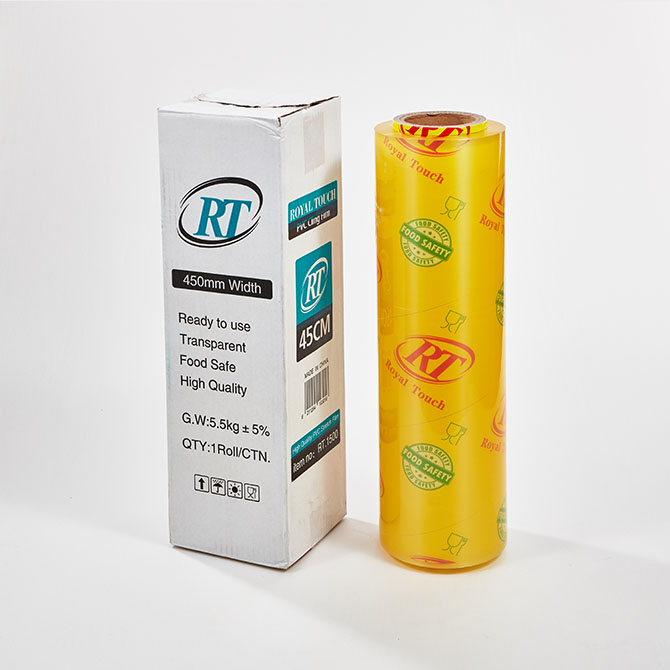
Choosing the right Plastic Wrap For Food packaging requires more than comparing price and roll size. Food type, storage temperature, cling performance, barrier properties, and food-contact compliance all affect whether a film is suitable for a particular application.
For restaurants, food processors, supermarkets, and packaging distributors, selecting the right material can improve handling efficiency and help maintain product quality during storage and transportation.
Different plastic films provide different levels of flexibility, moisture resistance, and gas barrier performance. The most suitable option depends on the food being packaged and the required storage conditions.
Polyethylene (PE) cling film is widely used for general Food Wrapping. It offers flexibility, moisture resistance, and good performance for many everyday packaging applications.
Polyvinylidene chloride (PVDC) film provides stronger oxygen and moisture barrier properties than many conventional PE films. It may be suitable for applications where limiting exposure to air is important.
Other specialized films and multilayer structures may be selected when a packaging application requires specific mechanical or barrier properties.
For example, a restaurant wrapping fresh vegetables may prioritize flexibility and ease of use, while a food manufacturer packaging products with greater sensitivity to oxidation may need to evaluate oxygen transmission rates more closely.
The type of food being packaged is one of the most important selection factors.
Fresh fruits and vegetables: Consider moisture management, flexibility, and the need for appropriate gas exchange. Some produce requires ventilation or specialized packaging rather than a tightly sealed wrap.
Meat and seafood: Evaluate hygiene requirements, moisture resistance, and the intended refrigeration or freezing conditions.
Bakery products: Clarity, flexibility, and protection against moisture loss may be important.
Prepared meals: Check compatibility with the food's fat content, storage temperature, and any reheating requirements.
Plastic wrap does not replace proper food handling or temperature control. Perishable foods must still be stored under appropriate conditions, and the packaging must be suitable for the specific food.
Film thickness influences handling, durability, and material consumption. However, a thicker film is not automatically better for every application.
A suitable plastic wrap should provide sufficient tensile strength and puncture resistance while remaining easy to stretch and dispense. Good cling performance helps the film stay in position and cover food containers securely.
Commercial buyers should also consider roll consistency. Variations in thickness, winding tension, or cling performance can create difficulties for workers and automated packaging equipment.
For example, a catering company wrapping large trays may prefer a wider film with reliable stretch and tear resistance, whereas a retailer packaging smaller items may prioritize easy handling and a neat appearance.
Always select plastic wrap that is intended for food contact and complies with the applicable requirements in the destination market.
Before purchasing, verify:
Whether the film is suitable for direct food contact.
Whether it is appropriate for the specific food type, including fatty or acidic foods.
Whether it can be used for refrigeration or freezing.
Whether microwave use or direct contact with hot food is permitted.
Whether the supplier can provide relevant compliance documentation.
Temperature limits vary by product and material. Never assume that all cling films are microwave-safe or suitable for high-temperature use. Follow the manufacturer's instructions for the intended application.
The required roll width, length, and core dimensions depend on how the film will be used.
Households and small food businesses may prefer compact rolls that are easy to store. Restaurants and commercial kitchens often require wider rolls and longer lengths to reduce roll changes. Industrial food packaging operations may need specifications compatible with automated wrapping or dispensing systems.
For B2B buyers, it is useful to confirm the following specifications before ordering:
| Specification | Why It Matters |
|---|---|
| Material type | Determines key film properties |
| Thickness | Affects handling and material usage |
| Roll width and length | Determines application coverage |
| Core dimensions | Ensures dispenser compatibility |
| Cling and tensile performance | Supports reliable wrapping |
| Temperature range | Confirms suitability for storage and use |
| Packaging and labeling | Supports transport and product identification |
Providing these details helps suppliers recommend a film that matches the actual operating requirements.
When sourcing plastic wrap in bulk, buyers should evaluate product consistency, production capacity, documentation, and delivery reliability alongside price.
A supplier offering a lower unit price may not provide the same thickness tolerance, roll length accuracy, or technical support as another supplier. These differences can affect material consumption and operational efficiency over time.
Before placing a large order, consider requesting samples and checking film thickness, unwinding performance, cling strength, and suitability for the intended food packaging process.
For OEM or private-label projects, buyers should also confirm customization options, packaging specifications, minimum order quantities, and lead times.
Choosing the right plastic wrap for food packaging involves balancing material properties, food type, storage conditions, film strength, safety requirements, and roll specifications.
For commercial and industrial buyers, clearly defining the application before comparing suppliers makes it easier to identify suitable products, reduce packaging problems, and maintain consistent quality.
Previous: No

We focus on overseas markets and major exports to different countries, selling well in Europe, America, the Middle East, Southeast Asia, etc.
Contact
No. 242 Shangjia Fenxi Road,Wanjiang District, Dongguan city, Guangdong Province ,China
Email:
Phone:
+86 18938161161