
We are committed to food packaging PVC cling film, PE cling film,stretch wrap, aluminum foil and other disposal food packing film/foil.

Language
>
We are committed to food packaging PVC cling film, PE cling film,stretch wrap, aluminum foil and other disposal food packing film/foil.
Saran Wrap is a type of transparent Food Wrapping film, historically associated with polyvinylidene chloride (PVDC), while modern cling films sold for food packaging may use different polymer systems such as PVC or PE. Therefore, “Saran Wrap” and “cling film” are not always technically interchangeable. For commercial applications, the actual polymer, film thickness, cling performance, barrier properties, and food-contact specifications should be evaluated before selecting a film.
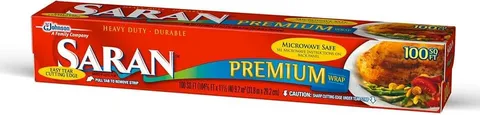
“Saran Wrap” is commonly used as a product or brand-related term, while cling film refers to a broader category of flexible food packaging films.
This distinction becomes important in commercial procurement. Two transparent wrapping films may look similar but have significantly different mechanical and barrier properties because of differences in polymer formulation, additives, thickness, and manufacturing processes.
For professional food packaging applications, material identification is therefore more meaningful than relying on the general term “plastic wrap.”
Learn more about the broader product category in What Is Cling Film?.
The characteristic adhesion of food wrapping film is related to the surface properties of the polymer and its formulation.
When the film is stretched over a container or food tray, it conforms closely to the surface. Surface interaction and film elasticity help maintain contact with the package, while the film's tensile properties allow it to remain intact during handling.
In commercial production, however, stronger cling is not automatically better. Excessive adhesion may make film unwinding and handling more difficult. A well-designed film needs a balance between:
Cling strength
Stretchability
Tensile strength
Tear resistance
Smooth unwinding
Surface release
The optimum balance depends on whether the film is designed for manual wrapping, retail packaging, or automated packaging equipment.
Film thickness has a direct effect on mechanical performance and material consumption.
A thinner film can reduce resin consumption and packaging weight, but its resistance to puncture and tearing may be lower if the formulation and processing conditions are not properly optimized.
A thicker film generally provides greater mechanical strength, but it also increases material usage and may affect wrapping efficiency.
For commercial food packaging, the appropriate thickness should therefore be determined by:
Food Type → Package Shape → Wrapping Method → Handling Conditions → Required Protection
Thickness consistency is also important. Variations across the film width can lead to unstable stretching, inconsistent wrapping tension, and problems on automated packaging lines.
Barrier performance determines how effectively a packaging film limits the transmission of moisture, oxygen, aromas, and other external factors.
For certain food products, moisture retention may be the primary consideration. For others, oxygen exposure can be more important because oxidation can affect color, flavor, and product quality.
The required barrier level depends on the food itself, expected storage period, temperature, and packaging environment.
This is why a food wrapping film should not be selected based only on transparency or cling strength. The entire packaging system needs to be evaluated.
Cling film primarily provides a physical barrier between food and the surrounding environment.
When properly applied, the film can help reduce direct exposure to external contaminants and limit moisture loss from the food surface. For fresh foods such as meat, seafood, fruits, vegetables, and prepared foods, this can support short-term storage and presentation.
However, cling film should not be considered a substitute for temperature control or appropriate food handling procedures. Packaging performance depends on the combination of film properties, food condition, storage temperature, and handling practices.
For commercial applications, see PVC Food Film.
Condensation is a common issue when warm food or high-moisture products are packaged and then exposed to a lower ambient temperature.
Water vapor can condense on the inner surface of the film, creating a fogged appearance. This can reduce product visibility in retail packaging.
For fresh food displays, anti-fog performance can therefore be an important technical specification. The effectiveness of anti-fog behavior depends on the film formulation, surface treatment, food temperature, humidity, and storage conditions.
This is especially relevant when transparent packaging is used for meat, seafood, vegetables, and ready-to-eat foods where visual inspection is part of the purchasing decision.
Stretchability is one of the key mechanical properties of cling film.
During wrapping, the film is typically stretched to improve conformity around the food or container. A film with suitable elongation can cover irregular surfaces while maintaining its structural integrity.
However, excessive stretching may reduce the effective thickness of the film and increase the risk of tearing or puncturing.
For this reason, commercial film development usually requires a balance among:
Elongation + Tensile Strength + Thickness + Cling Performance
The ideal balance depends on both the film formulation and the wrapping method.
PVC and PE are two important polymer systems used in modern food wrapping applications.
PVC cling film is often selected for applications requiring high transparency, strong cling, and good presentation characteristics. PE cling film offers flexibility and good mechanical performance and is widely used for foodservice and commercial packaging.
The best material depends on the specific application rather than a universal ranking.
For more information about PE film, see What Is PE Cling Film?.
For a broader comparison of film materials, What Is Cling Film Made Of? provides additional technical information.
Commercial buyers should evaluate the film according to actual packaging conditions.
Important specifications include:
Film Material: PVC, PE, or another polymer system.
Thickness: Determines material consumption and contributes to mechanical performance.
Width: Must match the package dimensions and wrapping equipment.
Cling Strength: Affects adhesion to food trays and containers.
Elongation: Determines how well the film stretches around products.
Tensile Strength: Influences resistance to tearing during handling.
Transparency: Important for retail presentation.
Anti-Fog Performance: Relevant for refrigerated fresh food displays.
Temperature Range: The film must be suitable for its intended storage and packaging environment.
Food-Contact Compliance: The film should comply with the applicable requirements of the target market and application.
Commercial Cling Film is produced through controlled polymer processing, extrusion, film formation, cooling, winding, and subsequent converting or packaging operations.
During manufacturing, factors such as melt temperature, extrusion stability, film thickness control, cooling conditions, winding tension, and surface treatment can affect the final film properties.
For industrial customers, consistent thickness and stable mechanical performance are particularly important because even small variations can affect film unwinding, stretching behavior, and packaging efficiency.
This is one reason professional cling film manufacturers need to control both formulation and production parameters rather than treating the product as a simple thin plastic sheet.
Food wrapping films are widely used in:
Fresh meat packaging
Seafood packaging
Fruit and vegetable packaging
Bakery products
Ready-to-eat foods
Supermarket food displays
Commercial kitchens
Catering operations
Food processing facilities
The required film properties can vary significantly between these applications.
For example, a supermarket fresh-food application may prioritize clarity and anti-fog performance, while a commercial kitchen may place greater emphasis on easy handling, stretchability, and reliable adhesion.
Manual wrapping allows an operator to compensate for some variations in film behavior. Automated packaging equipment does not have the same flexibility.
On an automated line, film must unwind consistently, maintain stable tension, stretch within a predictable range, and remain dimensionally stable throughout production.
Inconsistent thickness, excessive cling, poor winding, or unstable mechanical properties can cause:
Film breaks
Uneven wrapping
Wrinkling
Poor package appearance
Material waste
Machine downtime
For this reason, commercial cling film should be evaluated not only by its laboratory properties but also by its processing behavior on the target packaging equipment.
For professional food packaging, the most appropriate film is not necessarily the one with the highest cling or the lowest price. The objective is to match the material and specification to the entire packaging process.
A suitable film should provide the required combination of mechanical strength, flexibility, transparency, adhesion, barrier performance, processing stability, and food-contact suitability.
DS Cling Film provides PVC cling film solutions and other food packaging films for different commercial applications.
Understanding the difference between a brand-associated term such as Saran Wrap and the broader category of cling film can help buyers make more precise decisions when selecting food packaging materials. The final choice should always be based on the actual polymer, technical specifications, packaging process, and application requirements.

We focus on overseas markets and major exports to different countries, selling well in Europe, America, the Middle East, Southeast Asia, etc.
Contact
No. 242 Shangjia Fenxi Road,Wanjiang District, Dongguan city, Guangdong Province ,China
Email:
Phone:
+86 18938161161