
We are committed to food packaging PVC cling film, PE cling film,stretch wrap, aluminum foil and other disposal food packing film/foil.

Language
>
We are committed to food packaging PVC cling film, PE cling film,stretch wrap, aluminum foil and other disposal food packing film/foil.
Heat resistant cling film can withstand higher temperatures than conventional Food Wrapping film, but its actual temperature limit depends on the material, thickness, manufacturing process, and intended application. Some specialized food-grade films are designed for microwave heating and warm food packaging, while others are intended only for refrigeration and room-temperature storage.
Common cling film materials include polyethylene (PE), polyvinyl chloride (PVC), and specialized heat-resistant polymers. Each material has different thermal properties, so checking the manufacturer's temperature specifications is essential before use.
There is no single temperature limit for all heat resistant cling films. Different materials and product formulations have different temperature tolerances.
PE Cling Film: Commonly used for fresh food packaging and refrigerated storage. Its heat resistance varies by formulation, and ordinary PE Cling Film should not automatically be considered suitable for high-temperature cooking.
pvc cling film: Frequently used for food wrapping because of its flexibility and cling properties. Its temperature tolerance depends on the specific formulation and plasticizer system.
Specialized Heat-Resistant Film: Certain engineered films are designed for higher-temperature food applications, subject to their tested specifications and intended use.
For example, a cling film designed for refrigerated food storage may not be suitable for covering food during microwave heating. Even when a film is labeled microwave-safe, it should be used according to the stated temperature and contact conditions.
Several factors determine how well cling film performs when exposed to heat.
Raw Material Composition
Different polymers have different melting points, softening characteristics, and thermal stability. Material selection is one of the main factors affecting the film's temperature resistance.
Film Thickness
Thickness can influence how a film responds to heating, mechanical stress, and deformation. However, a thicker film does not automatically have a higher maximum service temperature.
Manufacturing Process
Extrusion conditions, material blending, and formulation control can affect film uniformity and physical properties.
Heating Duration
Temperature exposure time matters. A film may tolerate brief contact with warm food but deform after prolonged exposure to the same temperature.
Food Contact Conditions
The presence of oil, moisture, and direct contact with hot food can affect film performance. Fat-rich foods are particularly important to consider when evaluating microwave use.
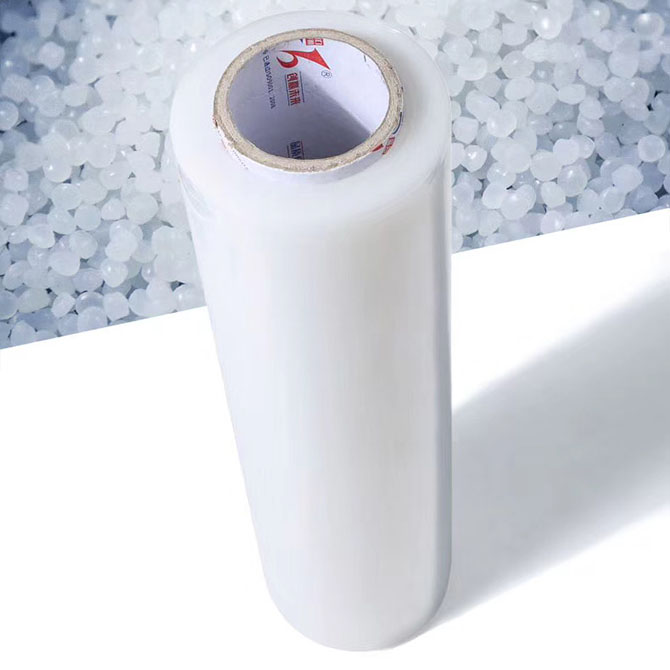
Some heat-resistant cling films are suitable for microwave use, but not all food wrapping films are designed for this purpose.
Before using cling film in a microwave, manufacturers' instructions should be checked carefully.
Important precautions include:
Confirm that the packaging explicitly states microwave-safe.
Follow the specified maximum temperature and heating duration.
Avoid direct contact between the film and hot food whenever the instructions require separation.
Leave an appropriate opening for steam to escape.
Do not use ordinary cling film for oven cooking unless it is specifically approved for that application.
For example, when reheating vegetables in a microwave, suitable microwave-safe film may be used to cover the container according to its instructions. However, the same film should not automatically be used to wrap food during conventional oven cooking.
Selecting the right film requires matching its technical specifications with the intended application.
Check the Temperature Rating: Look for the manufacturer's stated maximum temperature and recommended exposure time.
Confirm Food Contact Compliance: Ensure the film meets the applicable food-contact requirements in the target market.
Consider Food Type: Different foods contain different amounts of oil, moisture, and fat, which may affect film suitability.
Evaluate Film Performance: Check transparency, flexibility, sealing behavior, and resistance to tearing under the intended conditions.
Review Application Requirements: Microwave heating, hot-food wrapping, refrigeration, and oven use are different applications and require different product specifications.
The temperature resistance of heat resistant cling film depends primarily on its raw material, formulation, thickness, and intended application. PE and PVC films are commonly used for food packaging, while specialized heat-resistant films are developed for more demanding temperature conditions.
For food manufacturers and packaging buyers, the most reliable approach is to select cling film based on verified temperature ratings, food-contact compliance, and actual usage conditions rather than assuming that all heat-resistant films have the same performance.

We focus on overseas markets and major exports to different countries, selling well in Europe, America, the Middle East, Southeast Asia, etc.
Contact
No. 242 Shangjia Fenxi Road,Wanjiang District, Dongguan city, Guangdong Province ,China
Email:
Phone:
+86 18938161161